 admin
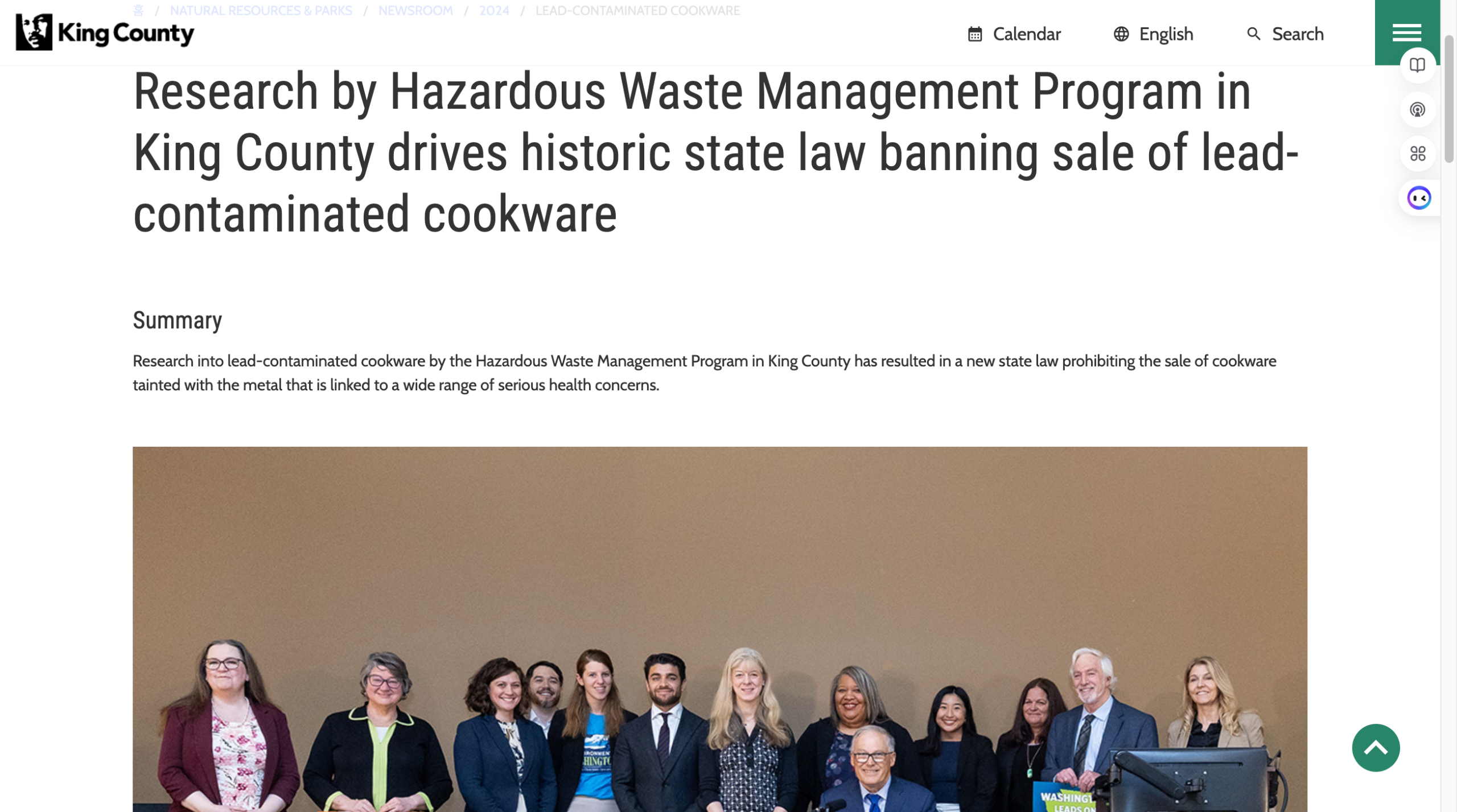
adminResearch led by the Hazardous Waste Management Program in King County played a pivotal role in a groundbreaking state law prohibiting the sale of cookware tainted with lead and positioning Washington as a leader in public health protection.
The impetus for this legislative milestone stems from rigorous research conducted by the Hazardous Waste Management Program in collaboration with the University of Washington. Their investigation revealed alarming levels of lead in aluminum cookware manufactured overseas, sparking urgent action to safeguard public health.
“You should not need to be a scientist to purchase safe cookware,” said Maythia Airhart, Director of the Hazardous Waste Management Program in King County. “Our research found cookware that tested at over 50,000 parts per million of lead.”
The newly enacted law, a result of these findings, restricts the sale of cookware exceeding lead levels of five parts per million, setting the most stringent limits on lead in cookware nationwide.
This legislation is a direct response to the significant risks of lead poisoning associated with certain aluminum cookpots, particularly those originating from overseas manufacturing. Lead exposure is known to cause severe health implications, including learning disabilities and developmental delays in children, as well as increased risks of fertility issues and high blood pressure in adults.
“There’s no safe level of lead exposure, and this law will help improve the safety of cookware products sold in Washington by reducing unintentional lead exposure,” said Dylan Orr, Environmental Health Director at Public Health – Seattle & King County.
Signed by Gov. Jay Inslee, the law marks a significant milestone in Washington’s ongoing efforts to address lead exposure. In 2009, the Washington State Lead Chemical Action Plan recommended universal lead exposure screening for children, yet recent reports indicate a gap in implementation.