 admin
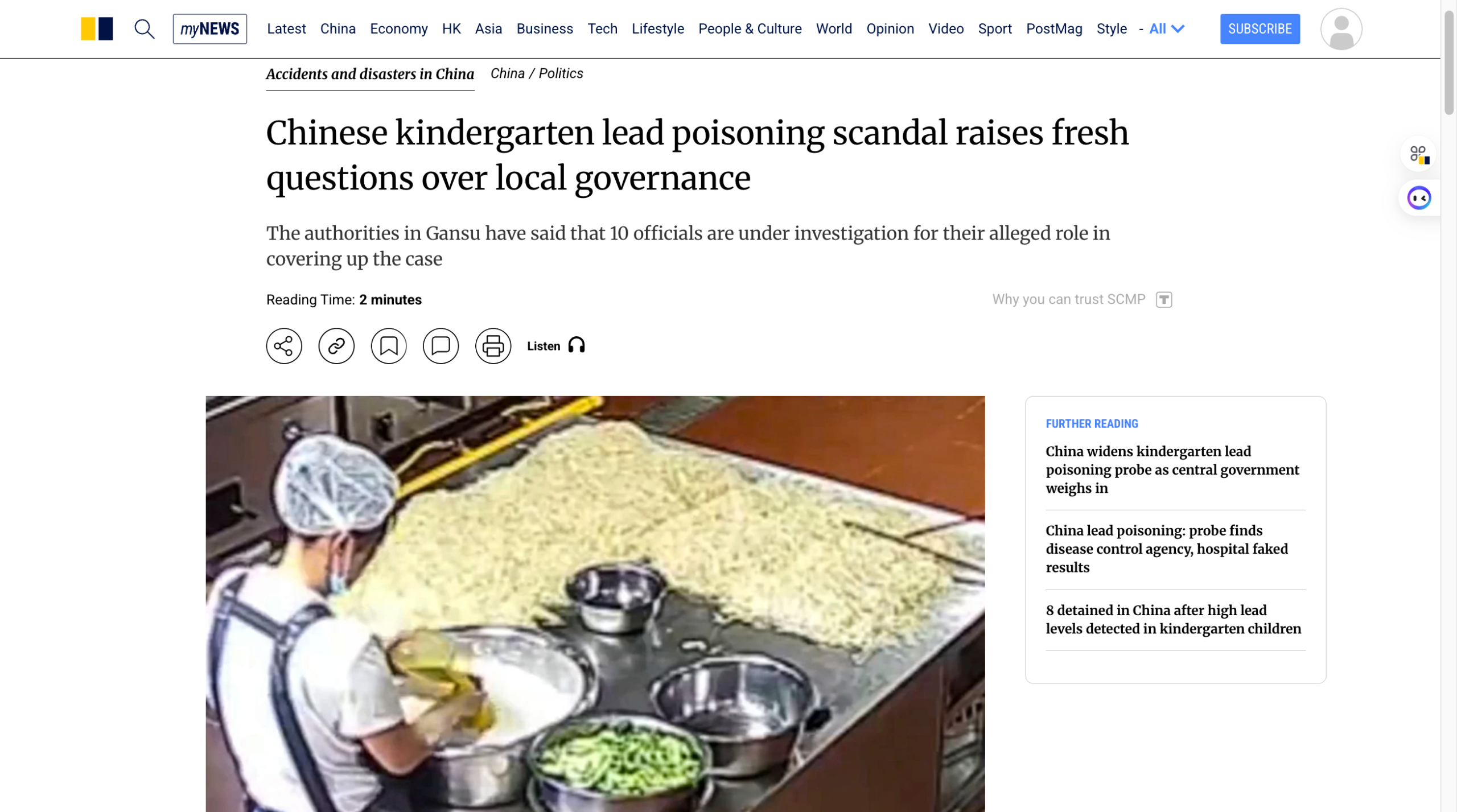
adminChina’s worst food safety scandal in almost two decades, in which hundreds of children suffered lead poisoning, has prompted fresh questions about the quality of local governance.
On Sunday, the authorities in the northwestern province of Gansu said 10 local officials were under investigation over the incident in the city of Tianshui.
One political scientist, speaking on condition of anonymity, said the slow response to the incident showed how local officials “try to avoid taking responsibility”.
He added that a “passive feedback mechanism” made it hard for the public to obtain accurate information.
The investigation found that a local hospital and the provincial centre for disease control and prevention (CDC) had falsified test results.
On Monday, the media outlet Caixin published a commentary questioning whether the data falsification was “motivated by pressure or profit”.
It said that children at the Peixin kindergarten had been tested for more than a year after a cook first used lead paint to colour food, but local hospitals had not reported any problems.
It said the Tianshui authorities had ample time to act, but “unfortunately every opportunity was missed”, blaming official “corruption and inaction”.
The official investigation found that the education bureau of Maiji district, where the kindergarten was located, had ignored illegal enrolments and had not conducted any food safety inspections of private kindergartens over the past two years.
Officials from both the education bureau and the district’s market supervision bureau are now being investigated over allegations that they had taken bribes from the kindergarten owner.
Eight people, including the kindergarten owner and principal, have been detained over the scandal.